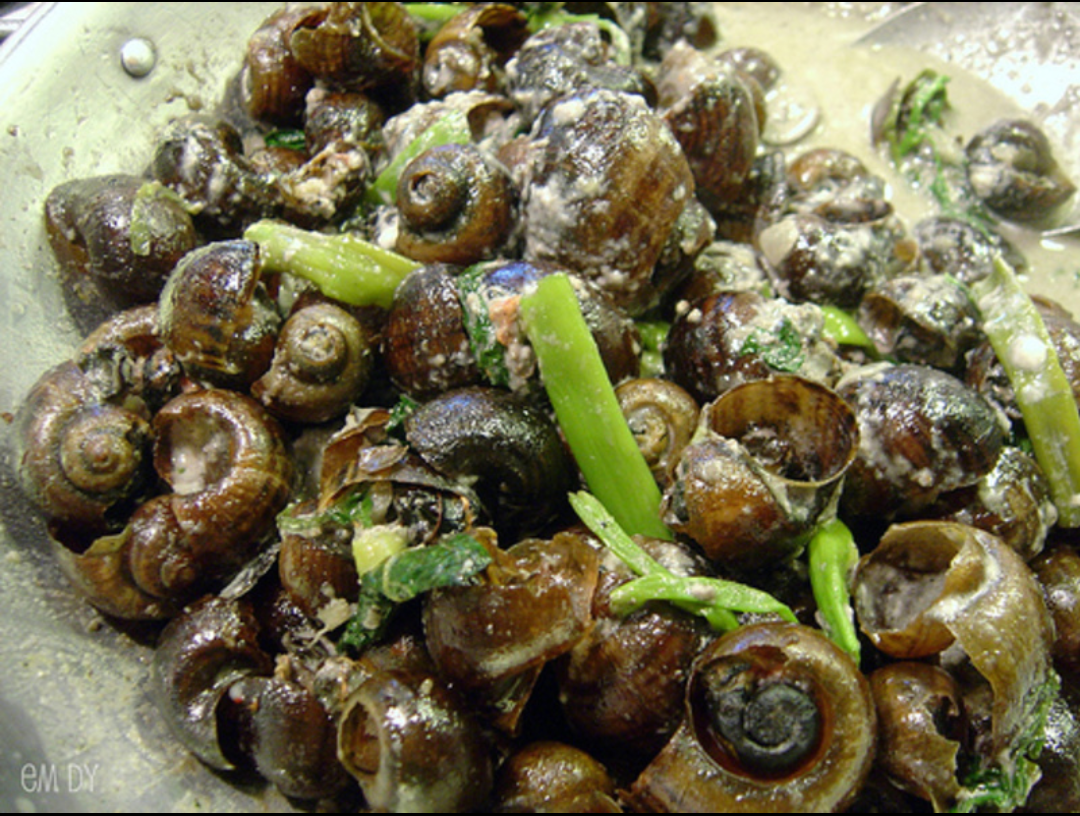
We’re not referring to snails that you find in the garden, but in rice fields or what we call “Lisseg” in Balangao. This is best cooked with napespesan weh ngiyug (coconut milk). Though the meat may be hard to extract, there is one sure method of doing so. Using a fork or you can get the thorn of citrus or Pakat in Balangao or you can only sharpen the edge of the stick then take the cooked snail outside of its shell. The best season you can get Escargot (Lisseg) is during the planting of rice in Balangao (Pinag hahamar) and after harvesting rice in Balangao (Panag fafata’).
Escargot in Coconut Milk (Ginataang Lisseg in Balangao)
Ingredients:
1 kl lisseg (escargot)
2 cups napespesan weh ngiyug (coconut milk)
1 small fawang (ginger), sliced
3 pcs siling labuyo (chili pepper), chopped
1/2 tsp ahin (salt)
1 tbsp mantika (cooking oil)
Procedure:
Put everything in a frying pan. Bring to boil and simmer until escargot is cooked through, about 15 minutes.
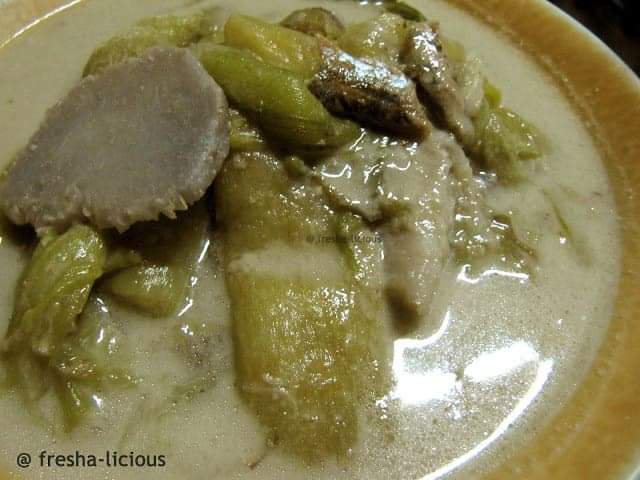
Ginataang Tepey means tepey (gabi) leaves, stalks and the roots cooked in coconut milk then seasoned with salt, and other spices. This dish is soupy and of course, tastes rich and milky because of the napespesan weh giyug (pure coconut milk) added to it. Balangaos preferred coconut milk as a substitute for water because it makes the soup creamy. Ginataang Tepey is usually cooked with meat and coconut milk but some cook it with coconut milk only for viand. My grandma used to cook this dish for us since we have plenty of gabi. Gabi roots are white in color similar to potatoes but different in taste. Below is the recipe for ginataang gabi or what we call “Tepey” in our tribe. Try this very simple recipe which I’ve learned from my grandma.
Recipe of Ginataang Tepey in Balangao
Ingredients:
tepey (fresh gabi stalks)
napespesan weh ngiyug (coconut milk)
Laya (ginger)
fawang (garlic)
ahin (salt)
Procedure:
In a deep pot, add the tepey (gabi) stalks. Add the napespesan weh ngiyug (coconut milk). Then add laya (ginger), fawang (garlic), and ahin (salt). Simmer it until it softens then taste if the seasoning and taste are perfect for your taste buds. This dish is perfect eaten when it is still hot.
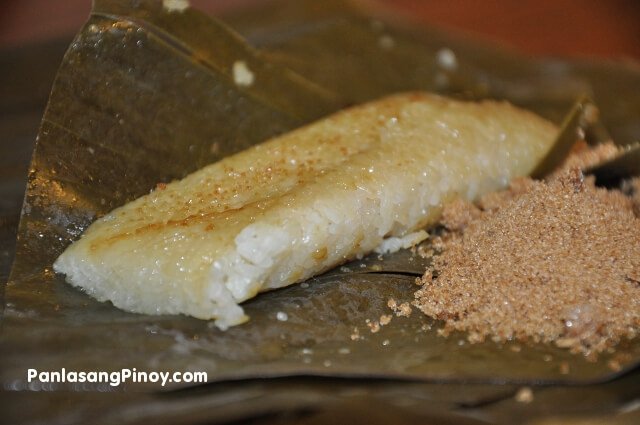
Mashed sticky rice (Chi-at) cooked in coconut milk and wrapped in banana leaves (tufun hen farat). Suman sounds good. And, it can be really good if you find the right vendor. The problem with this common sweet treat in the Philippines is that many vendors take short cuts in making it. Suman made with condensed milk rather than coconut milk, and ordinary rice rather than sticky rice. The result is disappointing. If made the traditional way, the Suman is really quite good. Suman is soft, slightly sticky, but the banana leaf will save your fingers! Suman is almost like a naturally made candy bar. This is best eaten either with sugar or latik (this is the residue when coconut milk is simmered) in Balangao we called it (Larag).
Recipe of Suman with Latik (Inanchila and Larag)
Ingredients
2 1/4 cups grind malagkit rice (Kineleng way Chi-at)
1 teaspoon lye water
2 cups water
1 whole banana leaf cleaned
Procedure:
Place the glutinous rice in a mixing bowl then pour-in water. Stir and soak for 2 to 3 hours.
Drain excess water from the mixing bowl then add lye water and stir thoroughly. The mixture will turn yellowish. Let stand for 30 minutes. Note: do not go beyond the recommended measurement for lye water.
Prepare the banana leaves. Note: Fresh banana leaves can be heated directly in fire for a very short time. This releases the natural aroma of the leaf and makes it more flexible. If you are using fresh frozen banana leaves, it is better to just wash it in warm water. You’ll need a pair of leaves per serving. The bigger leaf should measure about 12 by 10 inches while the smaller is 4 by 5 inches.
Arrange the banana leaves by placing the larger leaf first in a flat surface then put the smaller leaf in the center of the larger leaf.
Scoop about 1/4 cup of the rice mixture and place it over the smaller leaf.
Fold the leaf to secure the rice mixture (see video for procedure) and tie with a kitchen twine.
Arrange the folded banana leaves with rice mixture in a cooking pot then pour-in enough water.
Turn-on heat then let boil. Simmer for 80 minutes.
Turn-off heat and transfer the banana leaf covered rice cake on a serving dish.
Serve with white sugar, brown sugar, or latik.
Share and enjoy!
 Balangao Delicacies